
A transdisciplinary, collective practice rooted in its local area
Photos by Suzane Brun
A transdisciplinary, collective practice rooted in its local area
This article is based on an interview with Johanne Gili, co-founder of La Fine Compagnie, theatre-maker, director and artistic collaborator, as well as on information available on the websites of La Fine Compagnie and Villa Mais d’Ici.
Founded in 2004 and based at Villa Mais d’Ici in Aubervilliers since 2011, La Fine Compagnie is a transdisciplinary theatre collective with roots in puppetry. It creates performances for theatres, streets and unconventional venues, as well as shared creations, workshops and long-term projects. Its artistic language brings together writing, theatre, objects and puppets, music, singing, dance, visual arts, photography, video and drawing.
The company does not view these disciplines simply as ways of illustrating an idea. Rather, they offer different entry points for thinking collectively about complex realities. One person may enter a project through writing a text, another through making or manipulating a puppet, singing, drawing, movement or conversation. This collective work makes it possible for direct expressions — for instance about racism or discrimination — to coexist with more indirect, poetic or fictional forms.
Creating with people, rather than “about” them
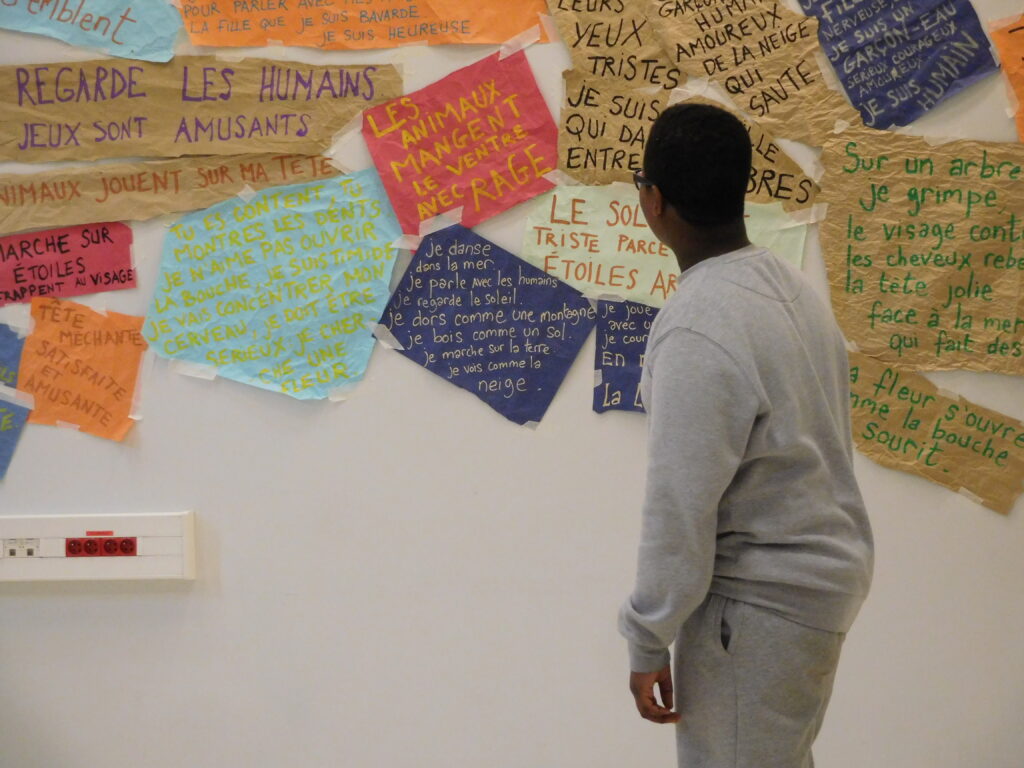
La Fine Compagnie works with a wide range of participants: children, teenagers, neighbourhood residents, older people, residents of hostels, exiled people and undocumented migrants. Its approach is not to ask people to provide raw testimony, but to invite them into a genuine creative process: writing, deciding what should be rewritten, experimenting with forms, and collectively choosing what can be shared.
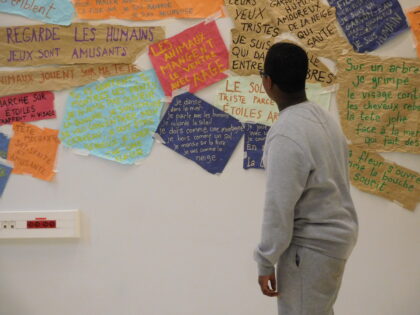
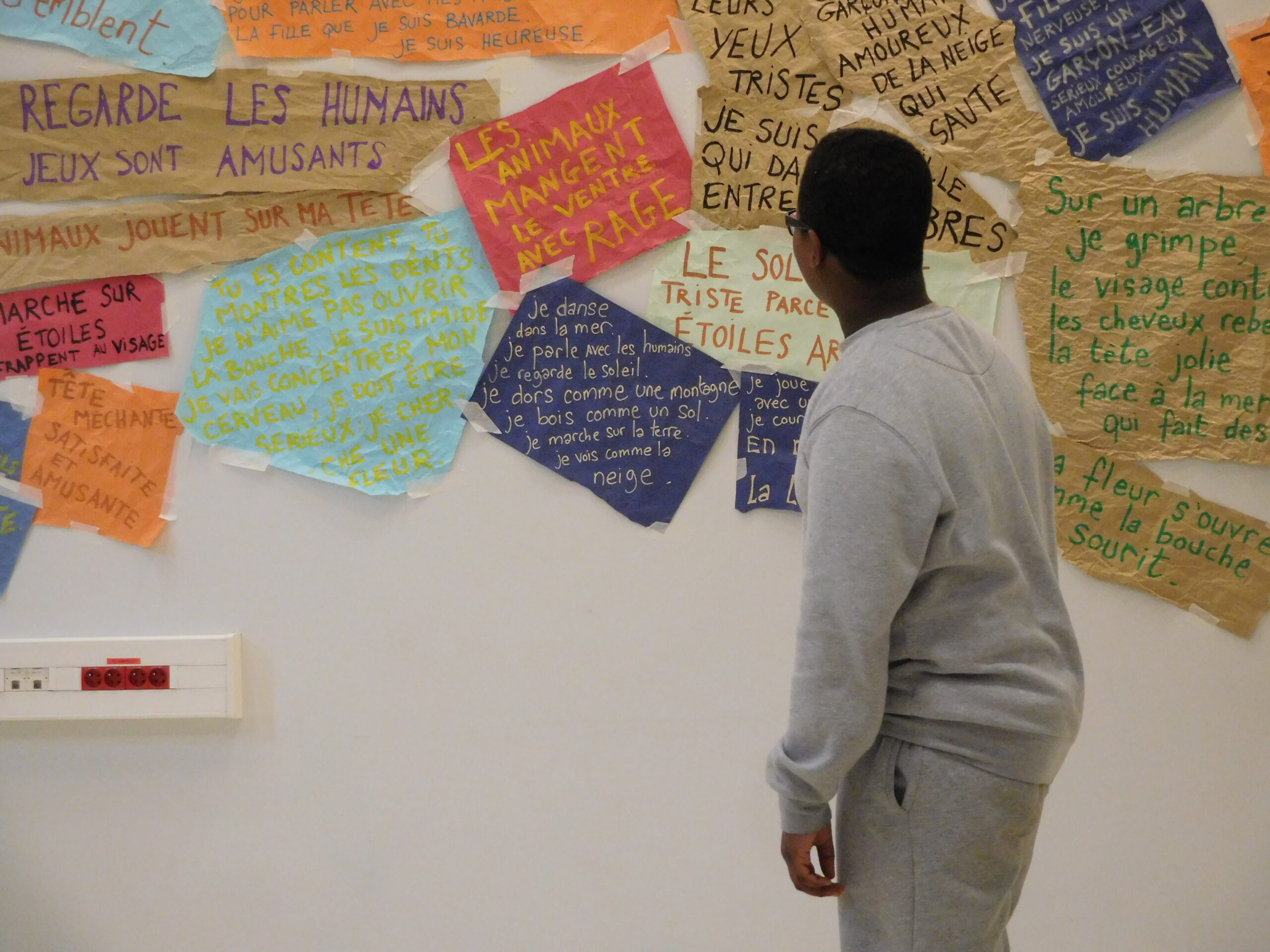
In writing workshops, participants remain the authors of their own texts. Rewriting is not imposed; it is discussed with the group, which decides what should be kept, transformed or staged. Depending on the project, texts may then be carried through voice, performance, puppetry, images or music. This method makes it possible to work with experiences that may be difficult or painful, without reducing people to an identity, a hardship or an administrative status.
The aim is to create a setting in which everyone can find their place, think and act alongside others. As Johanne Gili explains in the interview, theatre can offer “a release valve”: a space where people are not alone, where they can express something of what weighs on them, present themselves differently and meet associations or people who can provide support.
Collaborating with visual artists
Collaboration between performing arts and visual arts is central to the company’s practice. Visual artists are not brought in simply to make a set: their artistic languages directly contribute to the writing and thinking of the works.
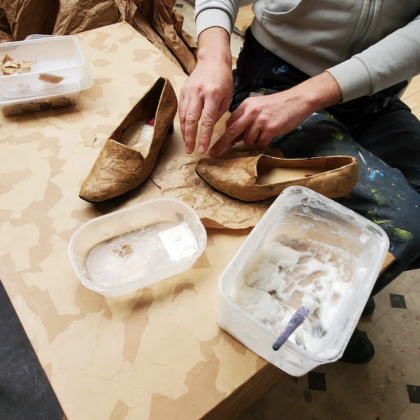
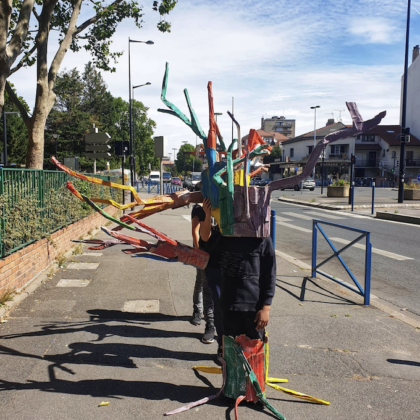
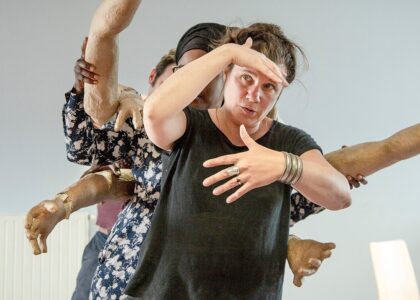
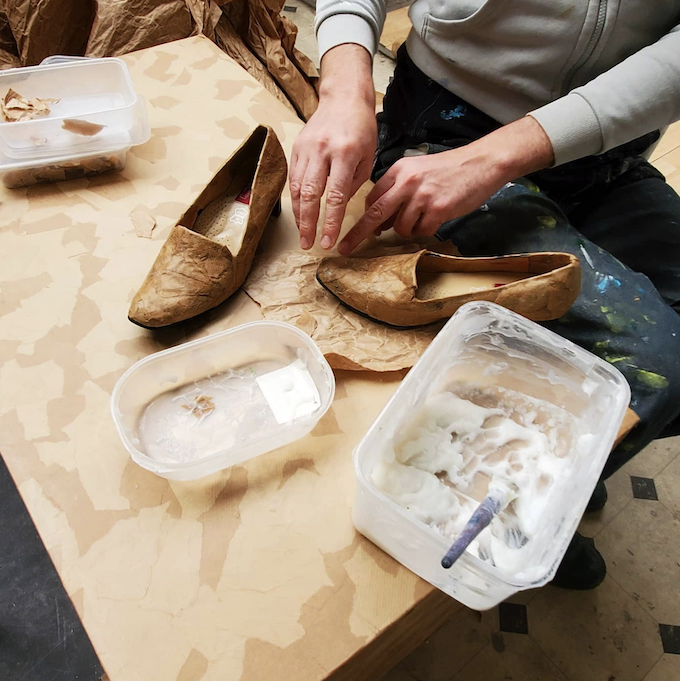
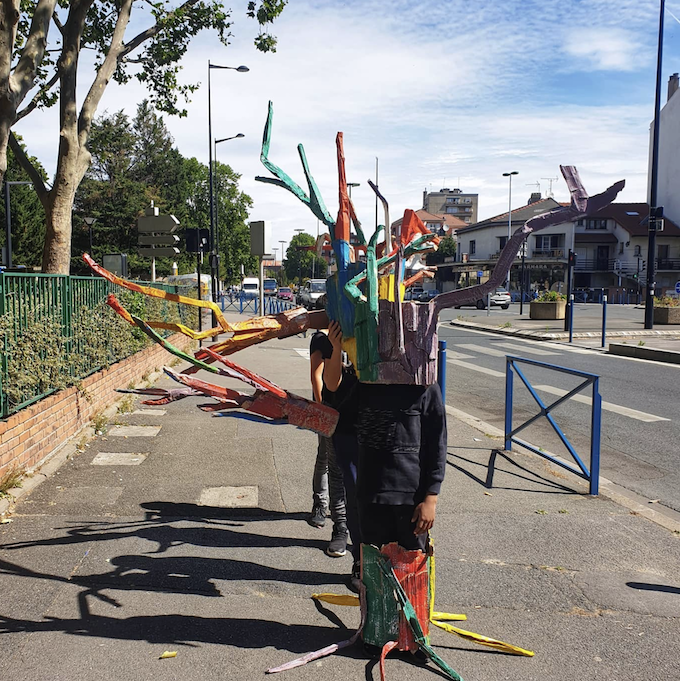
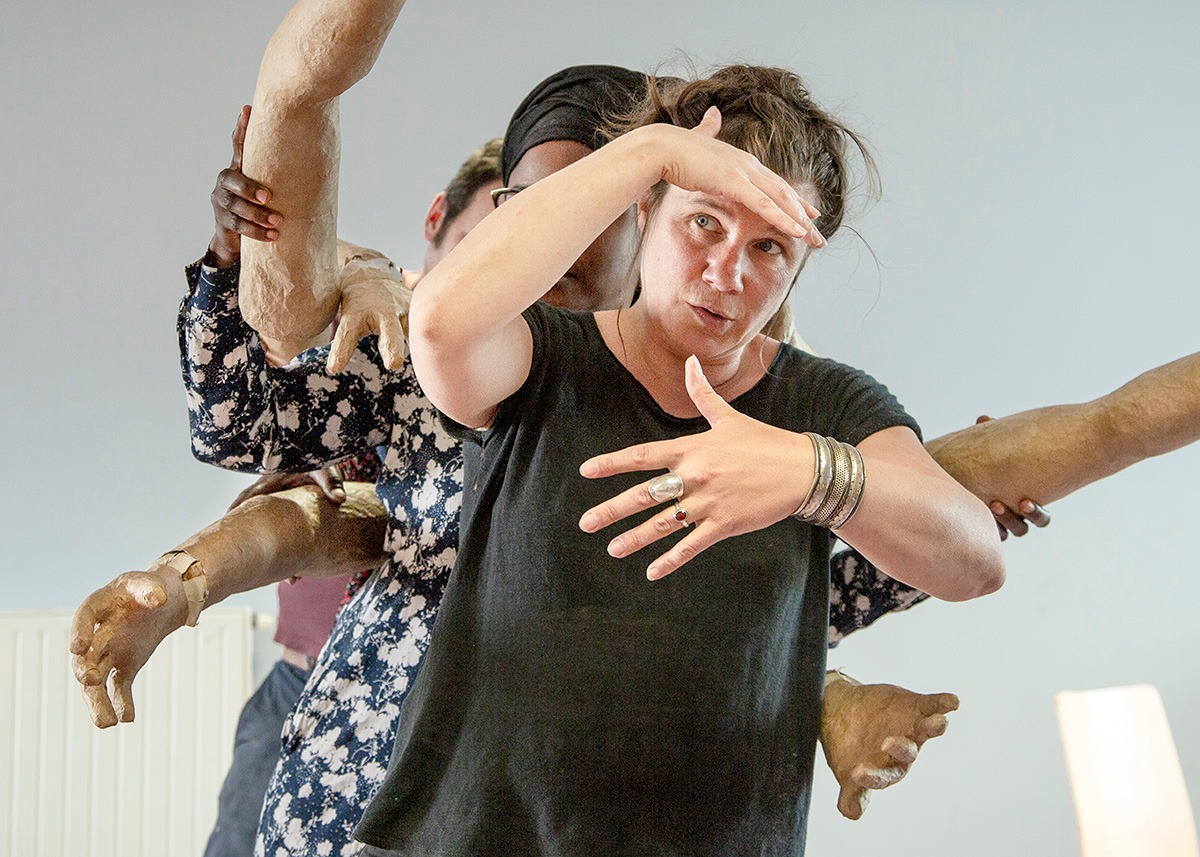
In some projects, drawings are made live during the performance and become a fully-fledged stage presence. Elsewhere, objects, materials or puppets made during workshops give a visual form to participants’ texts. Puppetry, scenography, photography and graphic projection shift stories into images without fixing or simplifying them.
This openness is made possible by the ecosystem of Villa Mais d’Ici. La Fine Compagnie can work there alongside makers, visual artists, puppeteers, photographers, videographers, designers, musicians and sound artists. The Villa brings together more than forty artistic structures that share workshops, rehearsal spaces, studios and common areas. Creation thus becomes genuinely collective, built from complementary skills and practices.
Performances connected to local projects
La Fine Compagnie’s performances extend and nourish its workshops, rather than existing separately from them. Mon cher ami le fantôme (My Dear Friend the Ghost), for instance, is an evolving transdisciplinary work developed since 2016 around exile, hospitality and the political construction of “illegal” immigration. It combines poetry, social sciences, readings, music, puppetry and graphic projection. Writing, visual arts, photography and video workshops have been organised with people directly concerned, particularly in Saint-Ouen.
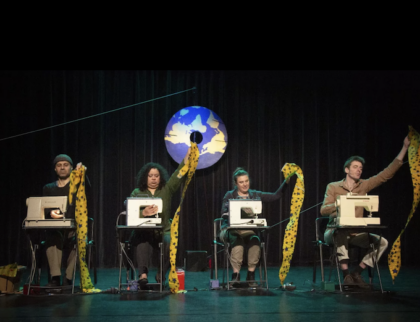
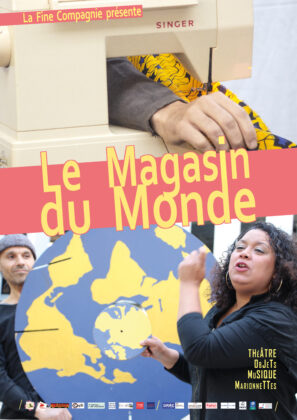
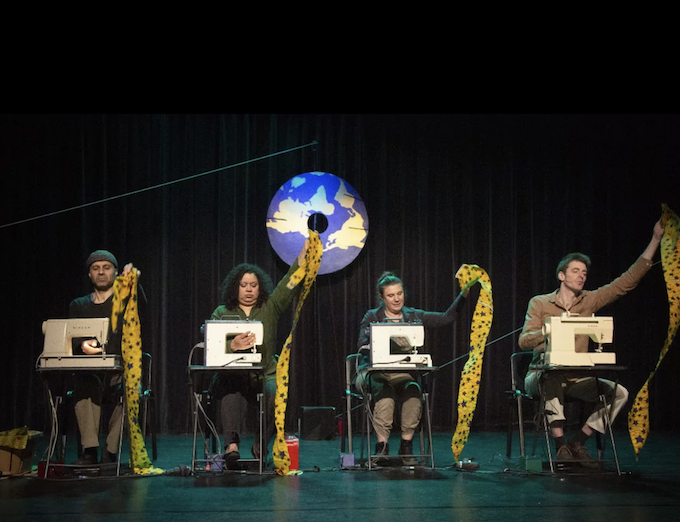
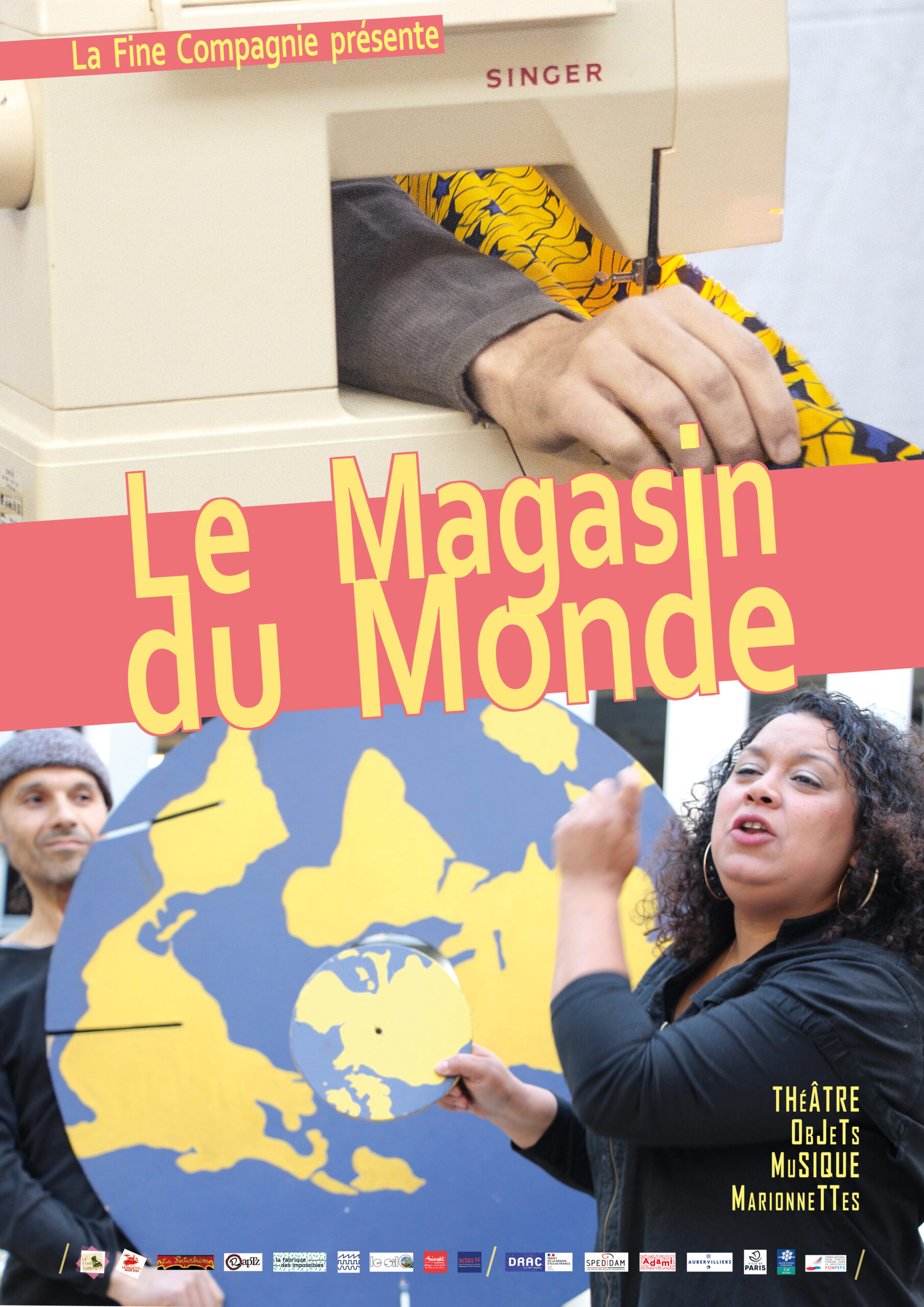
With Le Magasin du Monde (The World Store), created in 2025, the company addresses a shared colonial history through the circulation of objects such as cotton, wax fabric, maps and sewing machines. The project brings together an Algerian-Moroccan-French team and creates a dialogue between historical and personal narratives, music, singing, theatre and the manipulation of objects.
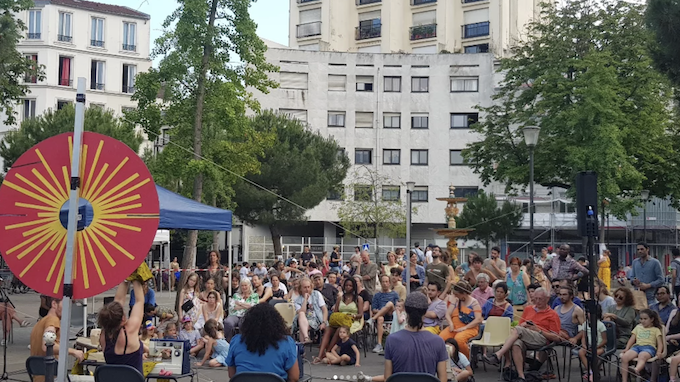
The workshops organised around this performance enabled young people to explore writing, discrimination, racism, objects, poetic lists and puppetry, according to their own choices. In some cases, their texts were included in a public presentation or echoed the company’s artistic proposals. This porous relationship between already developed works and participants’ own creations is one of the key strengths of the company’s practice.
Funding consistent with the project’s values
La Fine Compagnie operates in a context where public support remains essential to live performance and local cultural action.
The company’s participatory projects and artistic creations receive public and local funding, notably through city policy programmes, the CAF, local authorities, social housing providers, the DRAC and the Île-de-France Region. Its productions also rely on an extensive network of partners — social centres, festivals, associations, independent cultural venues, schools and libraries — which host and/or purchase its various artistic and participatory projects.
The Villa itself is a non-profit cultural space that organises free, intergenerational artistic workshops open to all, together with its resident artists and companies.
In the interview, Johanne Gili stresses a clear political choice: to preserve free access for participants wherever possible and to avoid private funding that might contradict the meaning of the projects. She gives the example that it would not be coherent to have a performance about neo-colonialism funded by a major bank. This is not an abstract rejection of sponsorship, but an attention to the relationship between the issues addressed, the conditions of production and artistic independence.
Villa Mais d’Ici: a place that makes collaboration possible
La Fine Compagnie has been based at Villa Mais d’Ici since 2011. This location is crucial to its work: the Villa is not merely a place to rehearse or store sets, but a collective environment for work, research and encounters.
Located in the Villette–Quatre-Chemins neighbourhood of Aubervilliers, Villa Mais d’Ici occupies a former coal factory that artists and theatre companies began transforming in 2003. Today, more than forty structures share workshops, offices and expertise there. Actors, directors, visual artists, puppeteers, photographers, musicians, videographers, makers, designers and printmakers work side by side.
This proximity encourages natural collaborations across disciplines. La Fine Compagnie can invite artists from the Villa to join participatory projects: a visual artist to devise a visual installation or draw live; musicians to accompany participants’ texts; dancers to build a collective intervention; or makers and puppeteers to imagine the objects and forms to be handled. These practices are not added afterwards: they transform the ways in which stories are written, heard and seen.
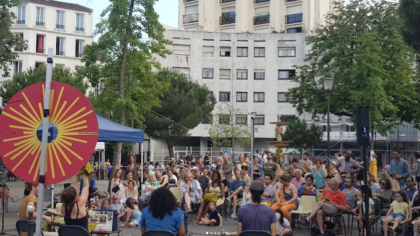
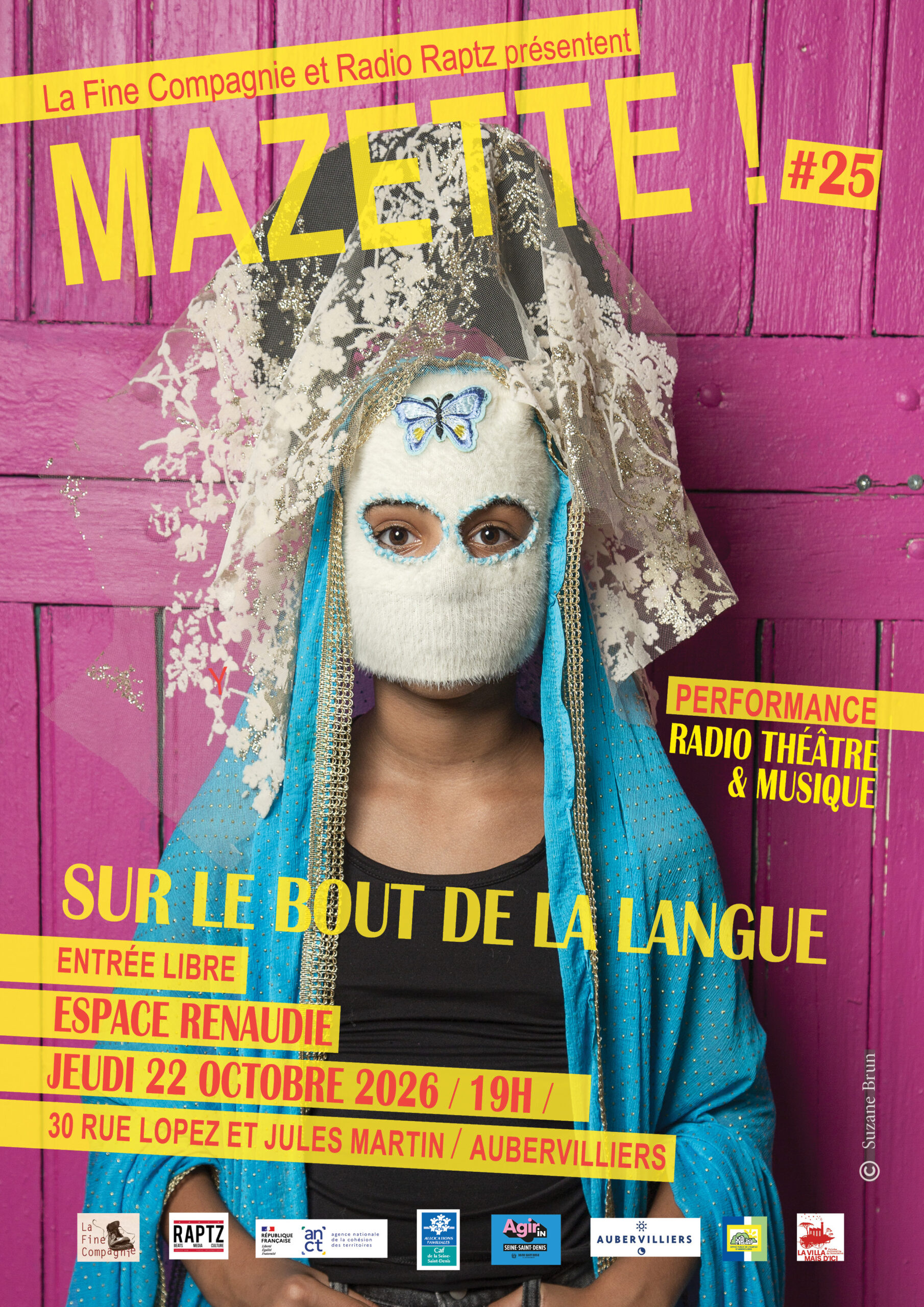
The Villa also operates as a place open to its neighbourhood. Throughout the year it organises work-in-progress presentations, performances, concerts, celebrations and meetings, inviting local residents to discover the artistic practices developed there. Together with its resident artists, it also runs free intergenerational workshops and projects created with associations and socio-cultural organisations in Aubervilliers and the surrounding area.
In this context, La Fine Compagnie’s projects can unfold over several months and bring together a group of artists around a shared theme. For the Ateliers de la Villa, for instance, several residents co-design activities for local people, then come together for collective highlights in which texts, music, dance, images, games and performances respond to one another.
Villa Mais d’Ici therefore embodies another way of producing and sharing art: a place where resources are shared, artists have access to a lasting working tool, and projects grow richer through their connection with the people who live and work around them.


