
A Natureculture learning site
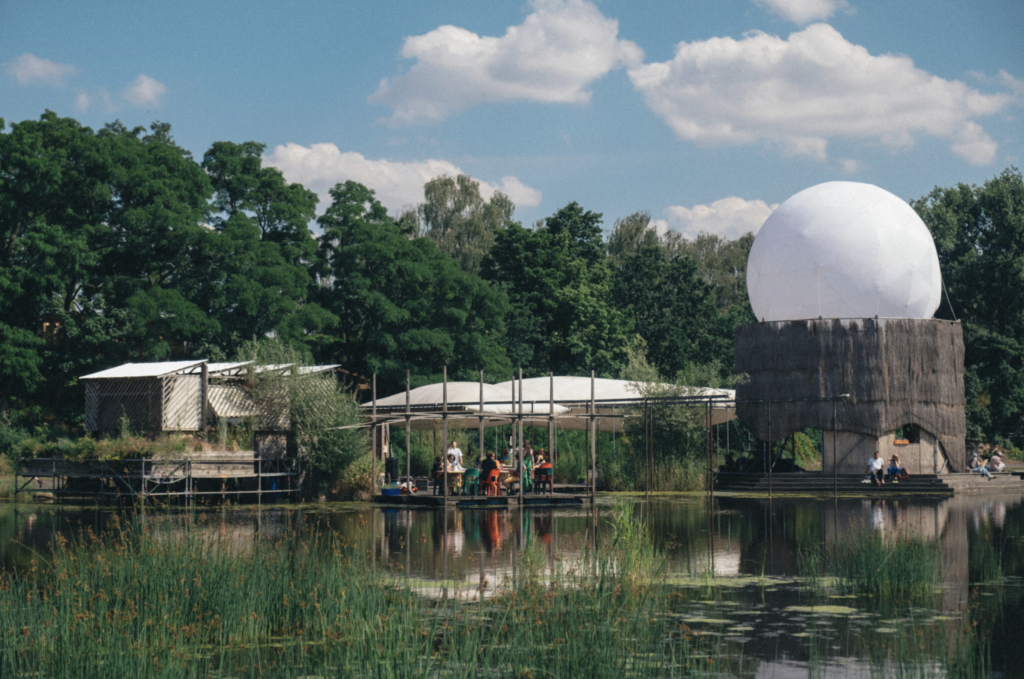
Photo by Helena Majewska
The Floating University is an urban practice that began in 2018 on the rainwater retention pool of the former Berlin Tempelhof airport. It is a “natureculture learning site” that challenges institutional ways of doing things by creating space for collective making and thinking. The initiative works with a vast network of partners, including Berlin’s Senate Departments, Allianz Foundation, Kulturstiftung des Bundes, Goethe Institut, Haus der Kulturen der Welt, and the architecture collective raumlabor Berlin. It is part of an informal, translocal network of self-organised initiatives on ecologically significant and contested landscapes worldwide. The site is open to neighbours, school children, students, artists, researchers, and local community initiatives.
A major result is the transformation of a monofunctional, inaccessible technical infrastructure into an ongoing eco-social experiment and shared space for encounter. In 2026, they celebrate eight years of this “Living Infrastructure” with an on-site exhibition.
The project is run by Floating e.V., a non-profit association with over sixty members who act as “stewards” caring for the site and its ecosystem. They host regular events like “Open Thursdays” to invite neighbours and grassroots initiatives to use the space. Projects like “Hidden Threads” engage locals in remembering the site’s past as a site of Nazi terror and forced labour.
As a non-profit and independent organisation, they depend on public sector endowments and private donations, including the Senate of Berlin, the Hauptstadtkulturfonds, and the Allianz Foundation. They are also part of EU-funded projects like “Naturescapes.”
Future plans likely involve strengthening the basin as water infrastructure, ecological habitat, and cultural space; continuing their stewardship practice; and securing the site’s future through fundraising and political work.
Locally, they improve outreach through regular free events, guided tours, workshops, and engagement with schools and neighbourhood initiatives. Internationally, they disseminate their activities through cultural partners, EU-funded projects, “Sister sites,” and participation in events abroad.


