
A collective cultural space founded on creation, solidarity and shared responsibility
This article is based on an interview with Bénédicte Lasfargues, a founding member of Villa Mais d’Ici and founder and artistic director of Compagnie Méliadès, as well as on information available on the Villa Mais d’Ici website.
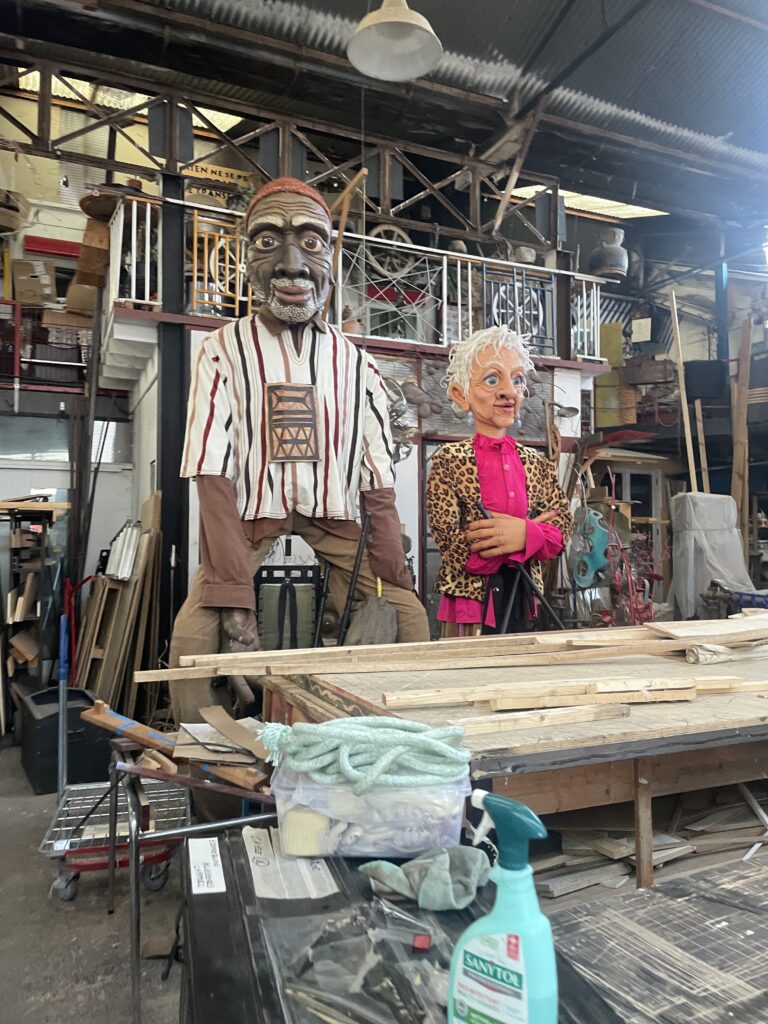
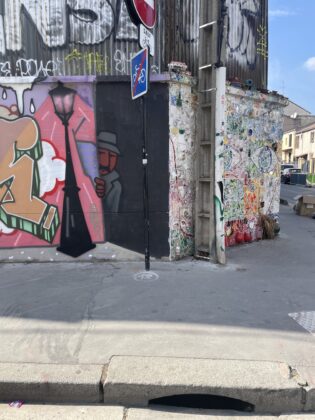
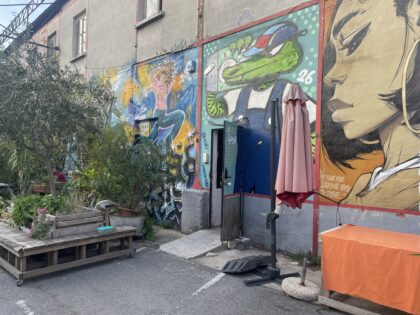
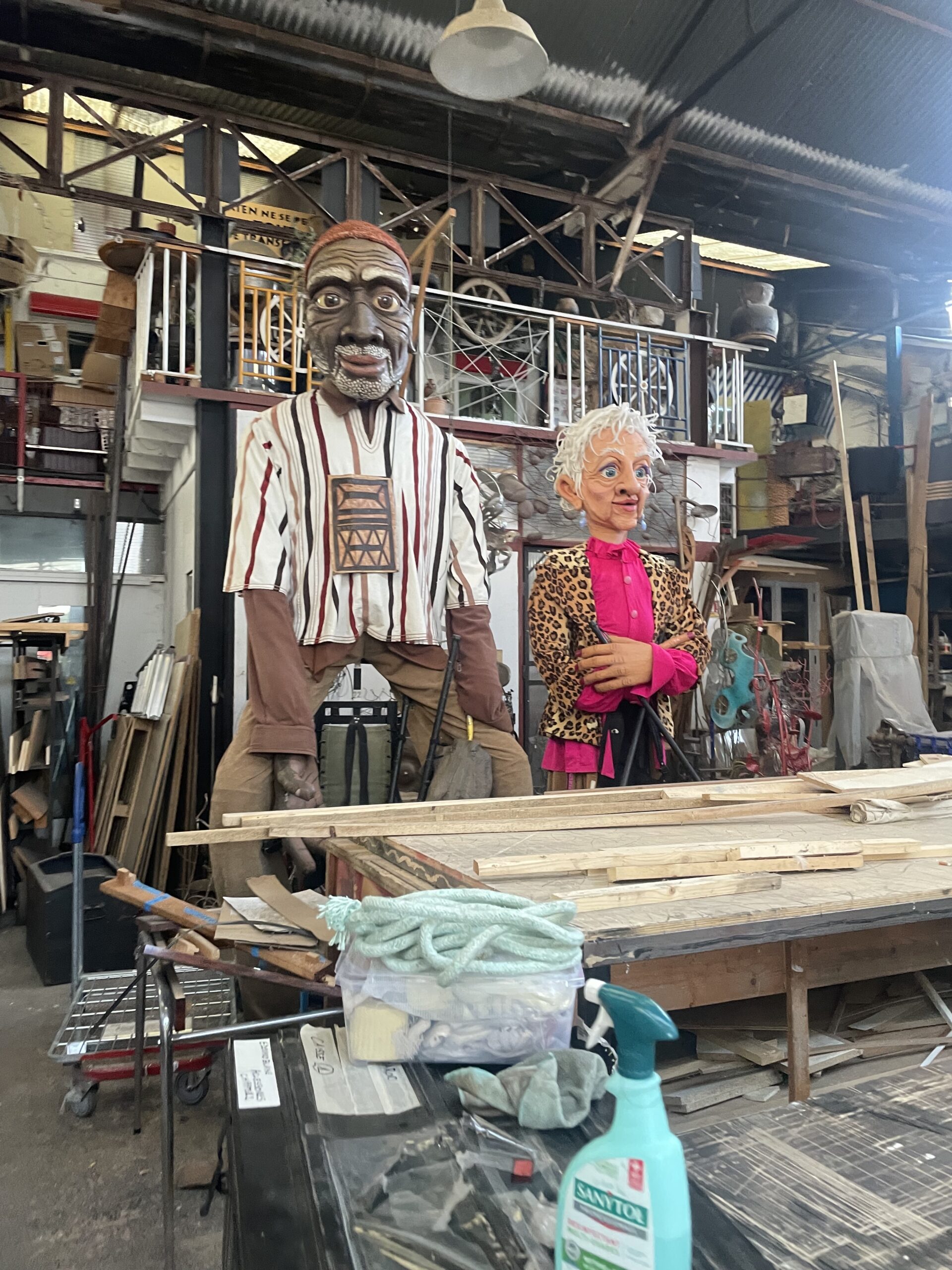
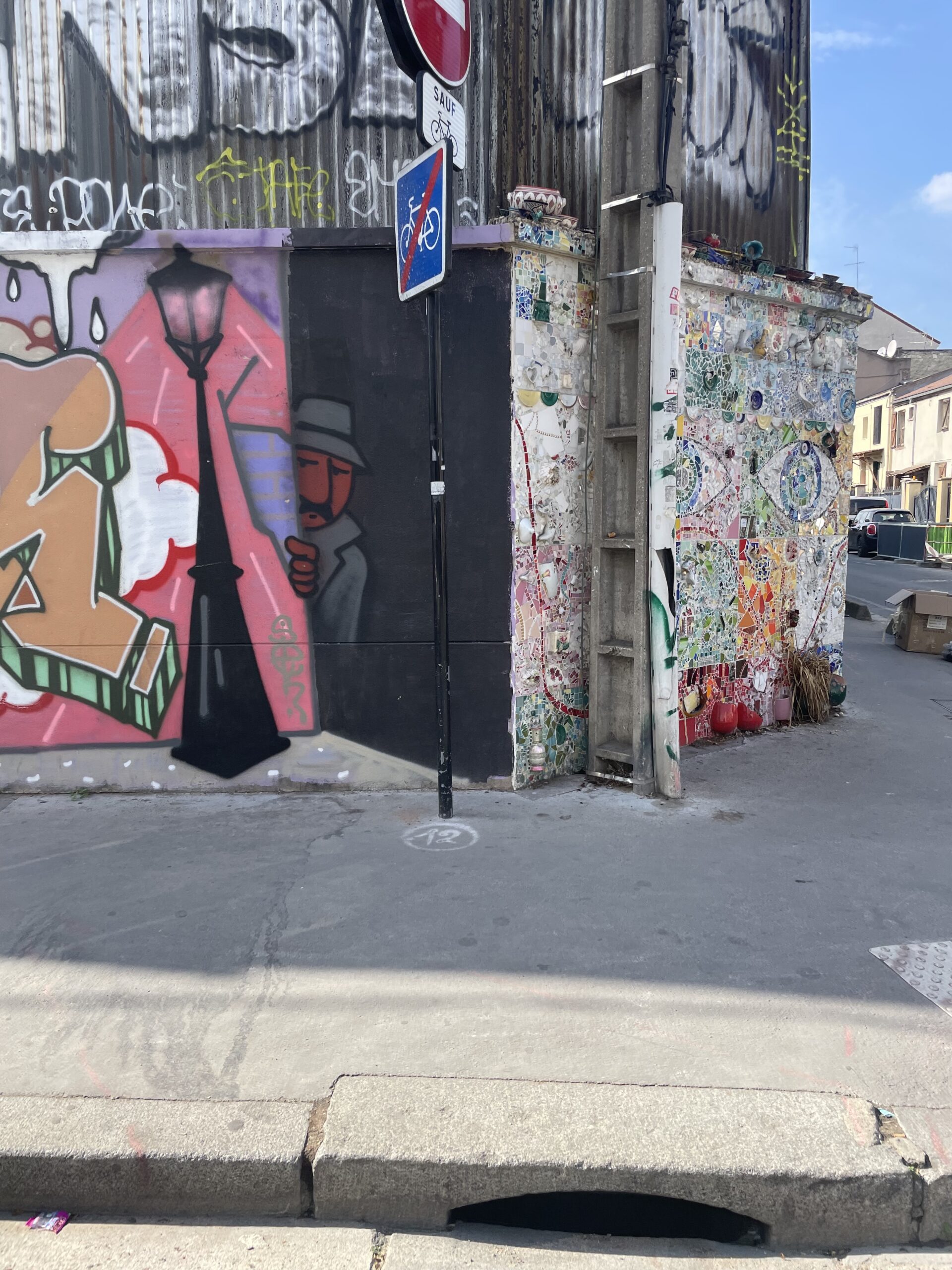
Villa Mais d’Ici is a cultural space located in Aubervilliers, in the Villette–Quatre-Chemins neighbourhood. It was created in 2003–2004, when a small group of artists and live-performance companies decided to find a more stable place to work, create and organise collectively. They chose a former coal factory whose architecture, large spaces and courtyard offered both practical and welcoming possibilities.
The project began with a few companies and artists and gradually developed into a space shared by more than 50 independent professional artistic organisations: theatre companies, street artists, puppeteers, visual artists, photographers, designers, musicians, filmmakers, craftspeople, graphic designers and sound artists now work side by side. Villa Mais d’Ici is therefore not a conventional arts centre: it is a working environment shaped by daily presence, mutual support and the commitment of its residents.
Bénédicte Lasfargues is one of the people behind the creation of the space. She remembers the early days of the Villa as a group of artists seeking to move beyond the precariousness of occupied or borrowed premises, without giving up their independence. The aim was not to reproduce the hierarchical model of a cultural institution, but to build what she describes as a utopia: a collectively managed place where different generations, practices and scales of activity could coexist.
A place for working before it is a place for showing
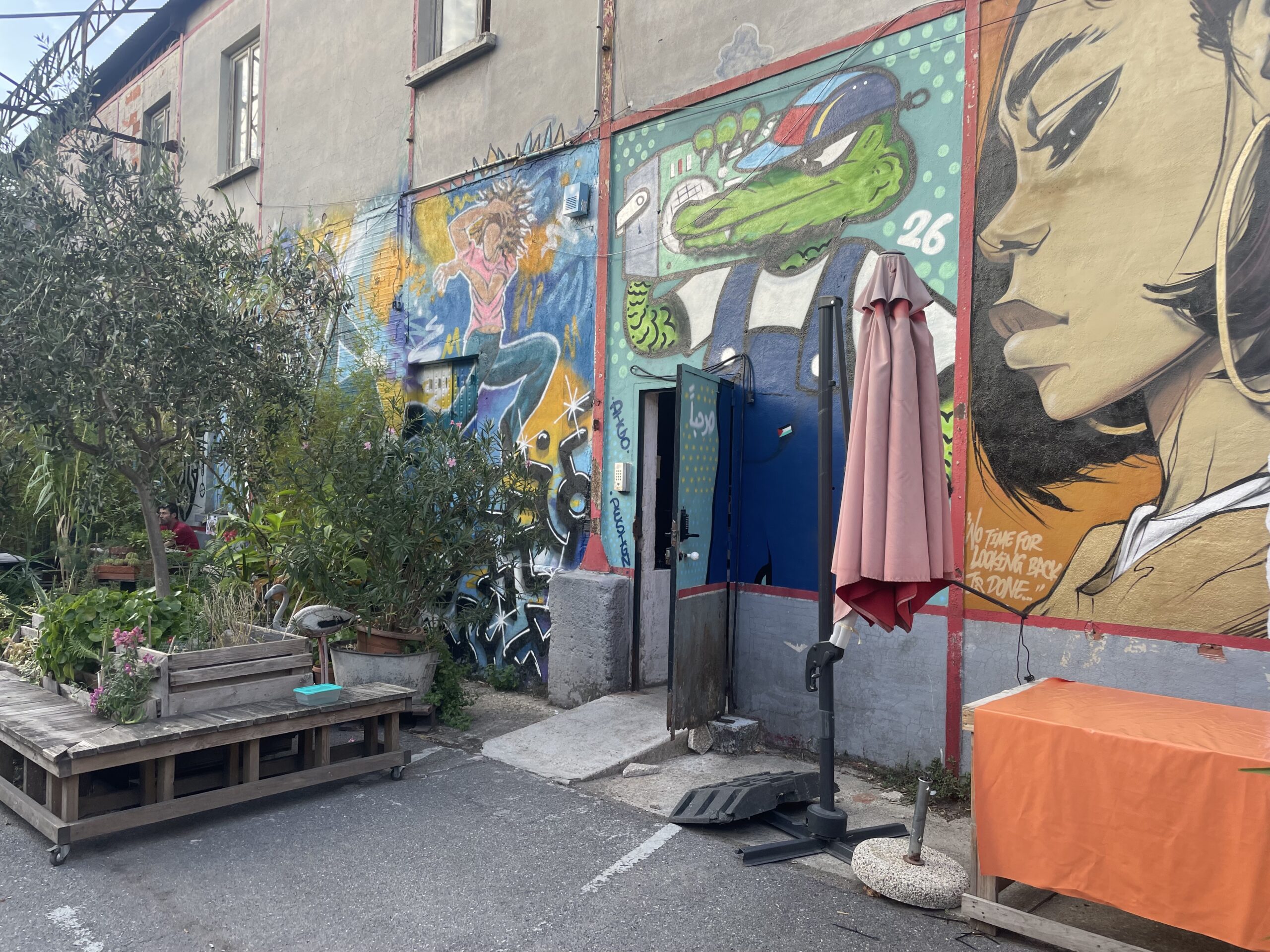
At the heart of its project, Villa Mais d’Ici is first and foremost a place for artistic work. Its rehearsal rooms, workshops, studios, equipped hall, courtyard, garden and shared spaces allow artists to develop their projects over time. The Villa also hosts temporary residents, supports emerging companies and organises events open to the public, but it is not intended to become a permanent performance venue.
This choice is important. As Bénédicte explains, turning the Villa into a permanent performance venue could generate more income, but it would call into question its primary function: giving artists the time and space they need to create. Events, concerts, open rehearsals, performances and meetings are organised regularly, but they remain linked to the life of the collective and to the desire to welcome the neighbourhood and fellow artists, rather than to a commercial logic.
Events at the Villa are free or offered at very accessible prices. The goal is not to generate income from audiences, but to make artistic creation accessible and create moments of encounter between residents, artists and inhabitants of Aubervilliers and the surrounding area. The Villa describes itself as a local cultural wasteland and a “culture factory”, developing projects with residents, associations and socio-cultural organisations in Aubervilliers and nearby.
Collective management as a daily practice
The Villa is organised as a non-profit association, with a collegial governance model. Permanent residents and active members take part in the Assembly of Villagers, which is the main decision-making body. The board then implements these decisions and coordinates the overall direction of the association.
For Bénédicte, collective management is not limited to an administrative structure. It takes shape in everyday work. Each resident pays rent, contributing to the running of the space and gaining access to shared areas. Residents also take part in collective responsibilities: helping during events, welcoming the public, running the bar, cleaning, carrying out repairs, painting and maintaining the premises.
This system does not claim that everyone contributes in exactly the same way or at the same time. Artists’ availability varies according to tours, projects and personal situations. Nevertheless, the principle remains that the Villa is not managed by an external body on behalf of passive users. It is maintained and exists thanks to the people who work there.
The model has evolved alongside the Villa’s growth. During its first years, the space operated with very few paid staff and no institutional support. As activity and the number of residents increased, a small professional team became necessary. However, the ambition of shared responsibility has remained central. This balance between collective involvement and professional coordination is one of the conditions that allows the place to endure.
An ecosystem of artistic practices
The diversity of the Villa’s residents is one of its main strengths. The original group was mainly connected to live performance and street arts, but the space gradually became more interdisciplinary. Visual arts, design, architecture, archives, video, music and performance now coexist there.
This diversity creates concrete opportunities for collaboration. A theatre company may work with a visual artist on scenography, with a craftsperson on objects and mechanisms, with a photographer on documentation, or with musicians and sound artists on the composition of a performance. The proximity of these different skills allows projects to develop naturally through exchanges and working relationships, rather than through occasional externally commissioned collaborations.
The Villa has also always attached great importance to intergenerational exchange. Early-career artists share spaces with more experienced professionals, creating informal opportunities for discussion, technical advice and transmission. According to Bénédicte, this intergenerational dimension has always been part of the richness of the place.
Compagnie Méliadès and the desire to invent new forms
Bénédicte Lasfargues is the founder and artistic director of Compagnie Méliadès, a live-performance company based at Villa Mais d’Ici. The company creates and presents performances, particularly in the field of street arts.
Méliadès’ work is deeply interdisciplinary. Its projects combine theatre, sound, image, visual arts, dance and immersive scenography. Bénédicte is interested in creating performances outside traditional theatre spaces and inventing forms that transform the public’s relationship to a place. Her work has notably developed in unexpected locations: factories, canal banks, on water, in streets and vacant flats, sometimes involving local residents directly in the creative process.
As part of the long-term project Les Cités utopiques, for example, the company occupied empty flats for several weeks and transformed them into immersive performance spaces. Residents were invited to take part in the creation, while the spaces themselves became an integral part of the narrative. These projects reflect an approach in which art is not simply brought into a neighbourhood as a finished product, but is built in dialogue with its spaces, memory and inhabitants.
Méliadès has worked extensively in Aubervilliers and throughout Seine-Saint-Denis, particularly in housing estates and through projects rooted in neighbourhoods. This local engagement was not originally conceived as a formal programme of “resident participation”. It developed through presence: artists being present in an area, meeting residents, organising events and gradually building relationships.
Participation without obligation
Villa Mais d’Ici and its resident companies run many participatory projects: workshops, free intergenerational artistic activities, collective constructions and neighbourhood events. Since 2016, the Villa has notably offered free workshops led by its residents and open to all generations.
Bénédicte nevertheless introduces an important nuance. Participation should not become an obligation or a norm imposed on every project. Some people may wish to create, speak, make things or perform; at other times, they may simply want to attend a performance, listen or watch. Likewise, artists must retain the freedom to develop different forms of work: collective creations with residents, but also independent artistic research and performances that require no public participation.
This position protects both artistic freedom and the freedom of audiences. It challenges the idea that participation is automatically meaningful. Instead, it invites us to reflect on the kind of encounter that is appropriate in a given context, and to ask whether people genuinely wish to take part.
Fragility, autonomy and the need to continue creating
The Villa’s longevity is remarkable, but Bénédicte clearly points out that the space remains fragile. Its residents are responsible for its economic balance, maintenance and the collective energy that keeps it alive. In a context where artistic work is becoming increasingly precarious, this responsibility can also be demanding.
For her, the challenge is to preserve the time, energy and freedom necessary for artistic creation. The Villa must remain open to the neighbourhood and attentive to social realities, without exhausting artists by imposing a constant expectation that they produce participatory projects, events or visible outcomes.
This may be the core of Villa Mais d’Ici’s identity: it is neither an enclave reserved for artists nor a provider of cultural services. It is a collectively maintained space where artistic work, mutual support, experimentation and relationships with the local area remain closely connected. More than twenty years after its creation, the Villa continues to explore the possibility of a shared cultural space, shaped and sustained by the artists themselves.


