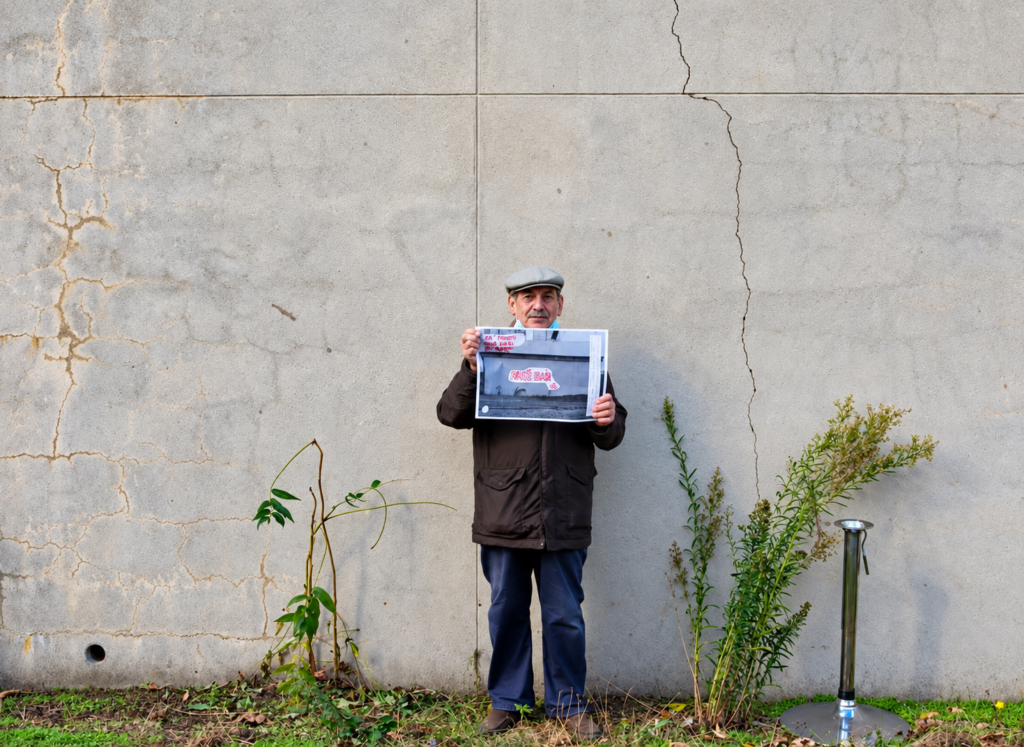
This article is based on an interview with Nil Dinç, author and director at GONGLE, and on information available on the collective’s website.
GONGLE is a group of artists, researchers and collaborators based in Montreuil, founded in 2006. It works at the intersection of theatre, visual communication, music, cinema, web-based practices and participatory research. Rather than treating theatre as a closed artistic discipline, GONGLE uses it as a space in which different ways of knowing, speaking and living can meet. Its projects are often developed outside conventional venues: in neighbourhoods, on sports grounds, in the street, in schools, with associations or directly in the places where people practise and gather.
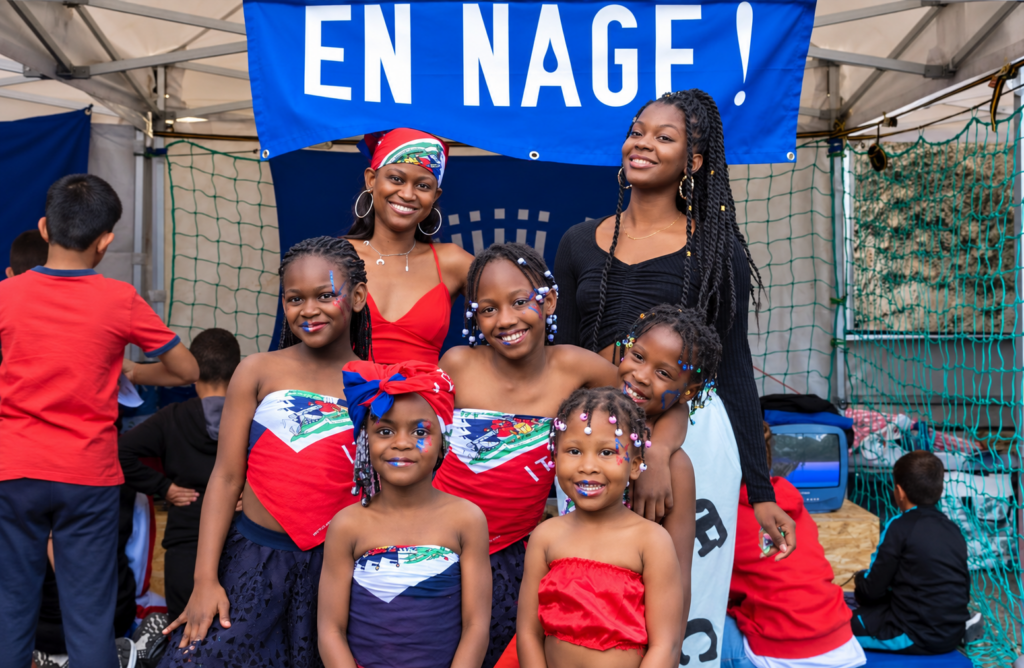
This interdisciplinarity also reflects a particular French context. In France, visual artists, filmmakers, musicians, technicians and graphic or digital practitioners can find a place within theatre productions and live-performance companies. The framework of the intermittence du spectacle—a specific unemployment-insurance regime for eligible artists and technicians working through successive short contracts—can make long-term artistic collaboration more viable, although it remains conditional and does not apply automatically to everyone. Service-Public.fr GONGLE’s teams are therefore not fixed: they change according to the subject of each project and may bring together people working in theatre, visual communication, music, cinema and web practices, as well as people directly concerned by the practices being explored.
The group’s first project was a children’s theatre piece entitled GONGLE. It dealt with learning, knowledge transmission and power relations in education, through the story of an inventor who creates a machine to teach children how to wash dishes. The project raised broader questions: what do adults imagine childhood to be? What do they assume children are capable of? The children’s reactions showed that many of these representations were clichés. This led GONGLE towards Peter Pan, a project in which children themselves could question and criticise the ways childhood is represented.
From there, a central principle emerged: GONGLE does not simply make theatre about a community; it works with people to develop representations of their own lives, their environments and the changes they would like to see. The work is both documentary and prospective. It begins with reality—through encounters, interviews, workshops and observation—but it also asks what can happen when this reality is represented publicly. Can an artistic act become a space for imagining transformations?
This is the origin of the GONLEG format, developed by GONGLE as a way of bringing together people from different social, professional or cultural backgrounds around a common question. A GONLEG is not exactly a performance, an exhibition or a workshop. It is a collective framework in which people can confront experiences, formulate proposals and create shared references for thinking about their environment.
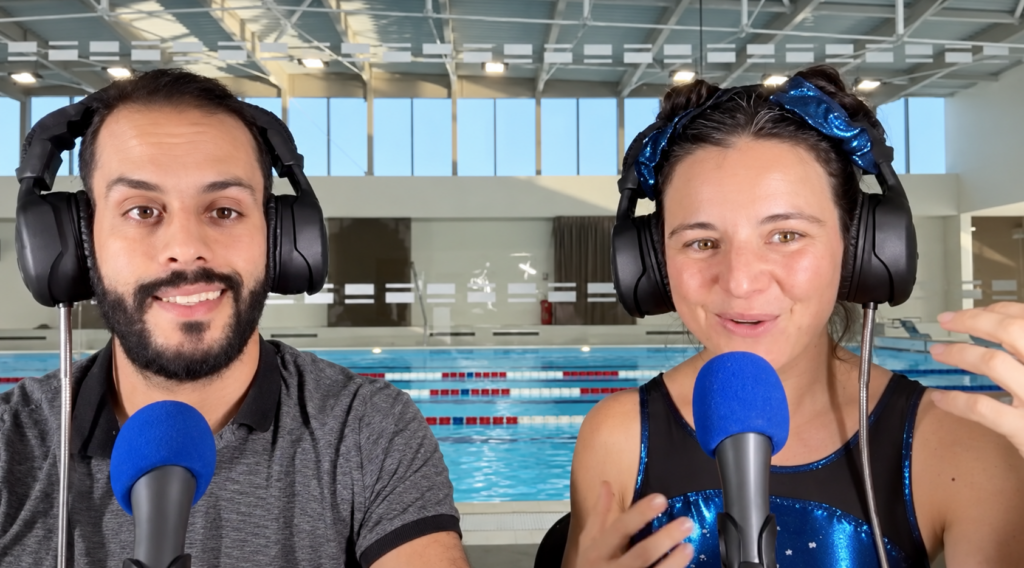
Over time, GONGLE became increasingly interested in play and sport. Sport appeared as a particularly rich field: a collective practice, a culture, a form of public expression and sometimes a space of political organisation. Football was especially important. One project brought together football players, supporters and artists from France and Turkey. It resulted in a bilingual performance presented in Istanbul and Paris, between the football pitch and the theatre. The project created an unusual mixture of audiences: theatre-goers, supporters, young people, people from Turkish-speaking communities and friends of the participants. It made visible languages, gestures and forms of belonging that are rarely heard in mainstream cultural spaces.
Since then, GONGLE has continued to work through sport, public space and popular practices—not to “bring culture” to people, but to recognise that people already produce culture, knowledge and forms of organisation. A supporter group, a bike-life collective, pétanque players or street-workout practitioners are not simply audiences: they have histories, rules, languages and expertise. The artistic question is how to create a situation in which this knowledge can meet other forms of knowledge, including those of artists, researchers, public institutions and local elected representatives.
A good example is a project connecting pétanque and astronomy. GONGLE organised encounters directly on pétanque grounds. Researchers came to speak about astronomy, while the players introduced them to their own game and its culture. The roles were reversed: the players became hosts and teachers in their own space. The point was not to make science more “accessible” in a simplified way, but to create a genuine exchange between people whose worlds would usually remain separate.
Most GONGLE projects take time. A creation may develop over two or three years, through fieldwork, workshops, interviews, public events and small-scale restitutions. The workshops can lead to videos, auditions, performances, sound pieces or exhibitions. At the same time, they nourish a more concentrated artistic creation. In some cases, people involved in the initial workshops later become paid performers or collaborators in the final production, rather than remaining only participants.
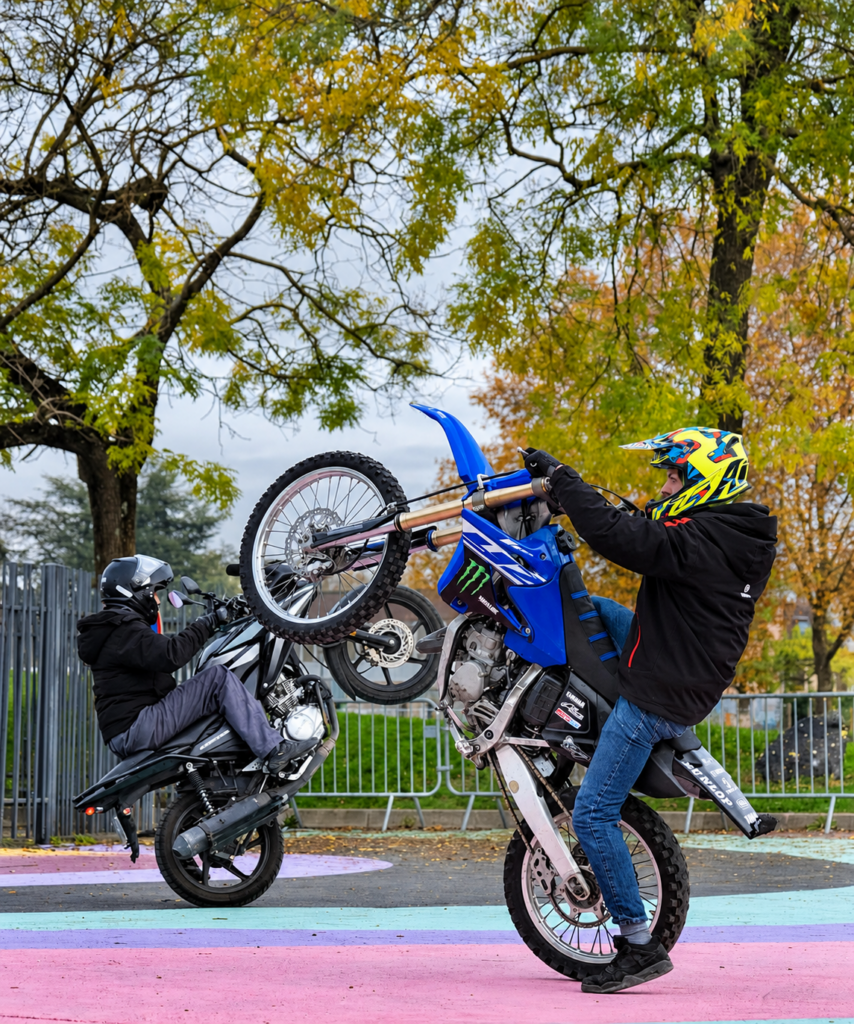
This way of working also has a local political dimension. GONGLE collaborates with cities, cultural venues, associations and researchers, while trying to preserve the freedom to work in the actual places of people’s lives. In the current project Avec ou sans casque ?, developed around bike-life practices, the workshops have been followed by public restitutions and discussions involving local elected representatives. The aim is to make young people’s experiences and viewpoints audible in debates that often concern them without including them. The project is presented as documentary, participatory and connected to cultural urbanism: art becomes a way to question how public space is shared, regulated and imagined.
Across its projects, GONGLE seeks to create more than a final performance. It tries to produce encounters, give value to forms of knowledge that are often overlooked, and allow people to see their own practices differently. Its work suggests that theatre can be a place where social worlds do not merely observe one another, but actually enter into dialogue and invent new ways of being together.