
A collective cultural space founded on creation, solidarity and shared respsustaining artistic practice as a condition of belongingonsibility
This article is based on an interview with Judith Depaule — theatre director, co-founder and director of the Atelier des Artistes en Exil (aa-e) — and on information published by the organisation.
Founded in Paris on 5 January 2017 by Judith Depaule and Ariel Cypel, the Atelier des Artistes en Exil supports professional artists who have had to leave their country and who wish to continue or rebuild their artistic practice in France. Judith Depaule remains the organisation’s director and leads its live-performance programme.
The aa-e was born from a concrete response to the arrival of Syrian refugees in 2015. At the time, Judith Depaule was artistic director of Confluences, a politically engaged cultural venue in Paris. The venue opened its theatre spaces to migrants, and the team progressively discovered the complex administrative, social and practical realities that shape life in exile. In 2016, a first gathering brought artists in exile together with cultural professionals. Its success revealed both a need and a gap: artists did not only need emergency support, but a place from which they could regain the conditions to create, work and be recognised as professionals.
Today, the aa-e works with artists from all disciplines and backgrounds. Its purpose is not to speak for artists in exile, nor to reduce them to their migration stories. It offers long-term support so that each person can continue to be an artist, develop projects and enter
The person cannot be separated from the artist
One of the central ideas in Judith Depaule’s interview is that artistic practice cannot be detached from the material conditions that make it possible. Legal status, access to housing, language learning, health, family responsibilities and professional opportunities all affect whether an artist can continue to create.
As she explains, an artist facing unresolved residence-status issues will also face obstacles as an artist: mobility becomes difficult, professional contracts are uncertain, and the anxiety of waiting for documents can make sustained work almost impossible. The aa-e therefore combines artistic support with legal and social accompaniment rather than treating these as separate fields.
The organisation receives artists individually, identifies their needs and offers advice, workspaces, professional contacts, administrative guidance and opportunities for public visibility. It can also help artists prepare a CV or portfolio, develop a project, understand the French cultural ecosystem and meet relevant partners.
This approach challenges a common division between “social work” and “artistic work.” For the aa-e, supporting the conditions of life is not external to creation: it is part of what allows an artistic career to exist.
A three-year pathway towards stabilitytive management as a daily practice
The Atelier des Artistes en Exil accompanies artists over a period of up to three years. During this time, the aim is not simply to provide temporary assistance, but to enable a gradual process of stabilisation.
The first axis is legal and social support: access to rights, residency procedures, orientation towards relevant services and help in navigating the realities of settlement in France.
The second is language learning. The programme Learning French through Art uses artworks, exhibitions, literature, poetry, theatre and oral practice as learning tools. It combines immediate linguistic needs with an understanding of French cultural and social references, and can lead to recognised French-language qualifications. Rather than seeing language as a preliminary hurdle before artistic work can begin, the aa-e makes art itself a space for learning, speaking and gaining confidence.
The third axis is professional accompaniment. Artists can learn how to present a project, respond to open calls, understand artistic and employment statuses, identify funding opportunities or meet cultural institutions. These are often invisible forms of knowledge, yet they are essential for entering and remaining in a professional environment.
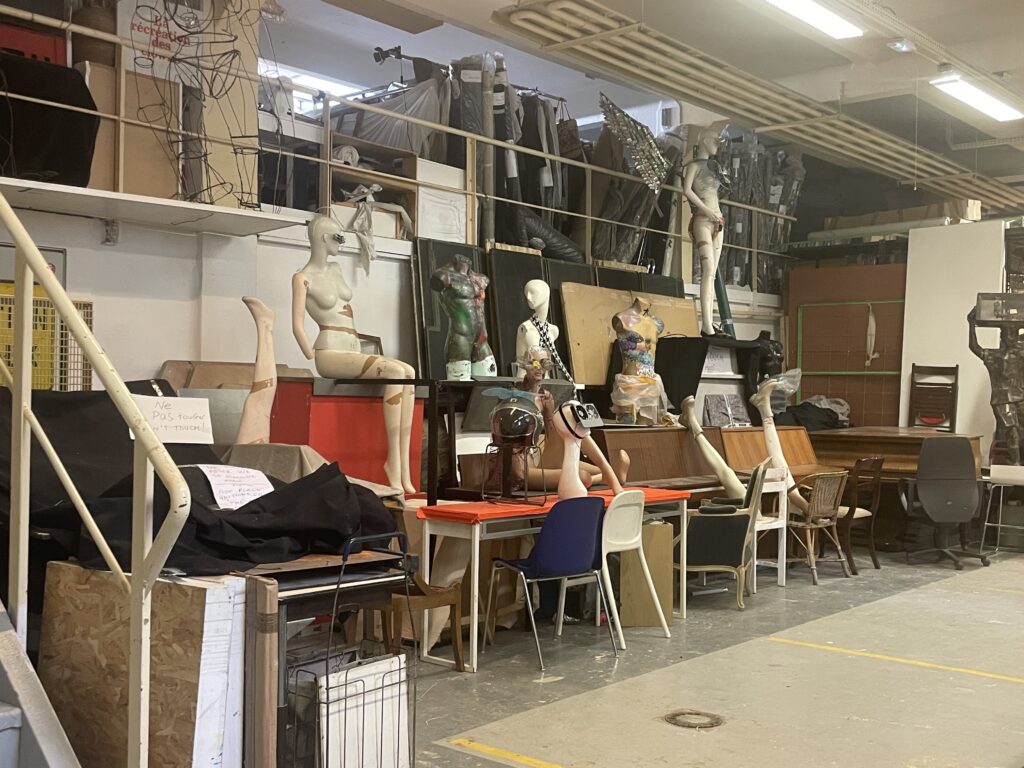
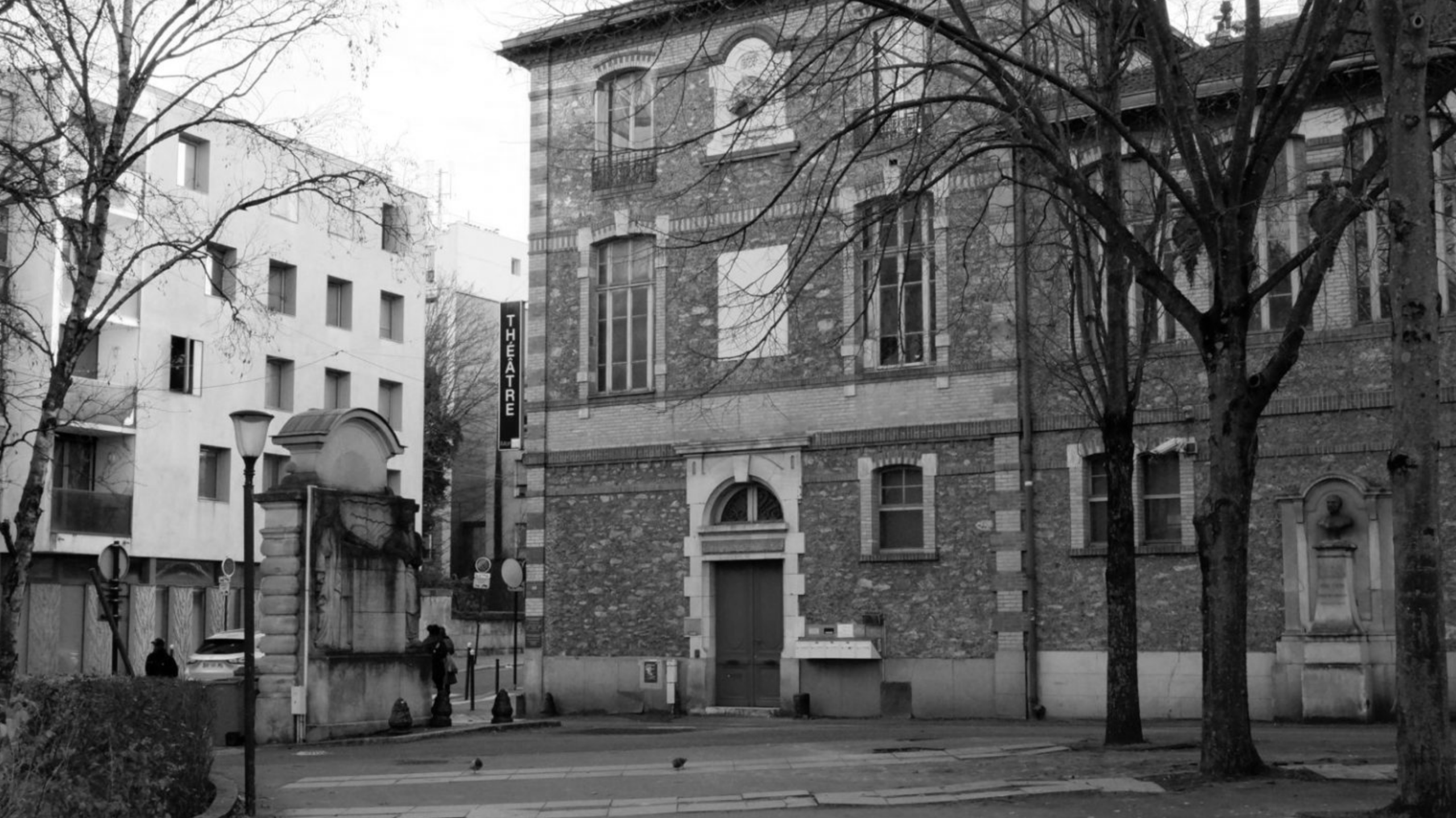
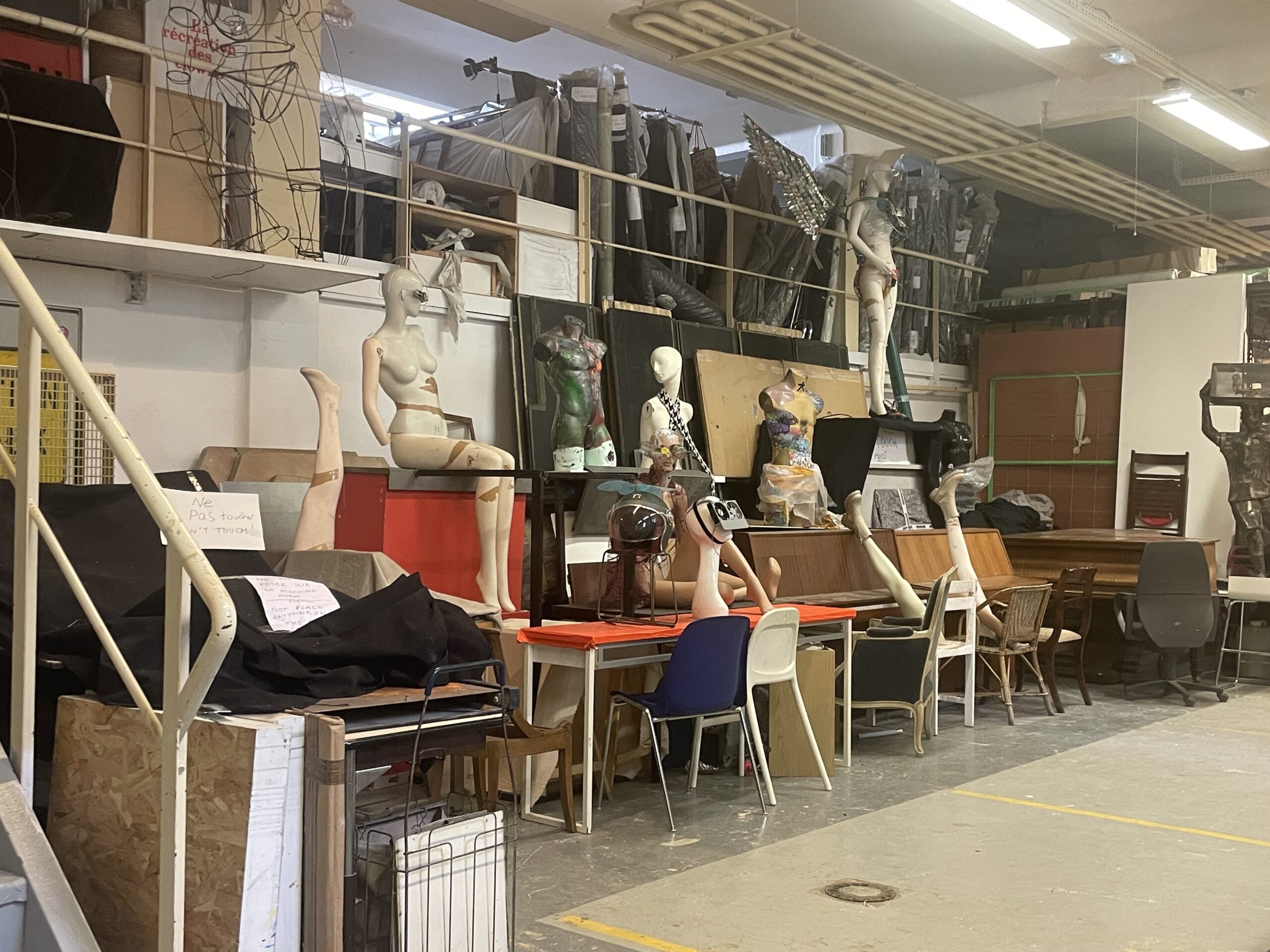
Finally, the aa-e provides a place to work: rehearsal spaces, studios, computers, meeting rooms and possibilities for residencies or public presentations. At its Paris site, now located at 106 rue Brancion in the 15th arrondissement, the organisation combines reception, social life, professional activity and artistic practice.
Continuing to be an artist
In the interview, Judith Depaule questions the usual definition of success. International exhibitions, prestigious prizes or major commissions may be important, but they are not the only markers of a meaningful outcome.
For her, a central success is that an artist does not have to abandon their practice because survival leaves no time, energy or mental space to create. Many people in exile must take exhausting jobs, send money to relatives abroad or manage unstable living situations. Over time, artistic work can become impossible to sustain.
The aa-e therefore supports different paths: returning to higher education, obtaining French qualifications, teaching, joining artistic companies, building a local network, accessing residencies or simply recovering the time and space necessary to work. Some artists become recognised internationally; others build more modest but stable professional lives. What matters is that their artistic practice can endure.
A place of work, encounter and public visibility
The Atelier des Artistes en Exil is not only a support structure. It is also a working environment in which artists can meet one another, exchange skills and develop collaborations across disciplines.
Visual artists, performers, musicians, writers, dancers, filmmakers, designers and craftspeople work within the same ecosystem. Their practices are made visible through exhibitions, concerts, performances, workshops and collaborations with cultural institutions. The aa-e also invites artists to teach artistic courses, allowing them to transmit their knowledge to wider audiences while generating professional opportunities. Its current programme includes, for example, courses in ceramics, drawing, watercolour, dance, writing and theatre, sometimes offered in several languages.
This circulation between creation, transmission and public presentation is essential. Artists are not positioned only as beneficiaries of support: they are also teachers, collaborators, organisers and cultural actors.
Rooting the organisation in its neighbourhood
In the interview, Judith Depaule also describes the importance of the aa-e’s new premises as a neighbourhood resource. Located at the edge of very different urban areas, the space raises a broader question: what could a contemporary community centre be?
The organisation has begun building relationships with local residents, associations and social structures. This territorial work is deliberately gradual. It depends on trust, repeated encounters and the curiosity of people who return, bring others and become involved over time.
The aa-e’s activities create points of connection between artists in exile, local residents, cultural professionals and organisations working in solidarity with migrants. In this sense, the place does not only offer protection or professional support; it also makes new forms of neighbourhood life and cultural exchange possible.
Funding a complex form of support
The model of the aa-e reflects the complexity of its work. In the interview, Judith Depaule describes a mixed economy combining public subsidies, project-based funding, support from foundations, donations and earned income from artistic services, workshops, exhibitions, performances, training and space hire.
This diversity is necessary because the organisation’s work cannot be financed through a single source. It includes social and legal accompaniment, language training, artistic production, professional development, cultural mediation and the maintenance of workspaces. The aa-e’s public information also identifies separate support for artist grants, residencies, cultural-action workshops, training and international cooperation, alongside support for its Paris and Marseille locations.
The organisation also develops international exchanges. Through the Creative Europe-funded In Ex(ile) Lab, nine cultural organisations in France, Italy, Cyprus and Portugal worked together between 2022 and 2024 to test transdisciplinary pathways for artists in exile. The project combined artistic activity, mentoring, residencies, audiovisual workshops, presentations and professional-development activities, while producing tools for cultural organisations.
Funding a cAn artistic and political infrastructureomplex form of support
The Atelier des Artistes en Exil demonstrates that welcoming artists in exile requires more than programming their work occasionally. It requires time, working conditions, legal and linguistic support, professional knowledge, places to create and durable relationships with cultural networks.
Its approach refuses the idea that an artist can be separated from the person’s legal, social and economic reality. At the same time, it refuses to reduce artists to that reality. The aa-e creates the conditions in which artists can be recognised not only as people in need of support, but as professionals, authors, teachers and active contributors to cultural life.
In this perspective, art is neither an accessory to integration nor a simple means of communication. It is a practice, a livelihood, a right to expression and a way of rebuilding one’s place in the world.


